
How Many Air Conditioners Can Your Electrical Panel Handle in Koh Samui?
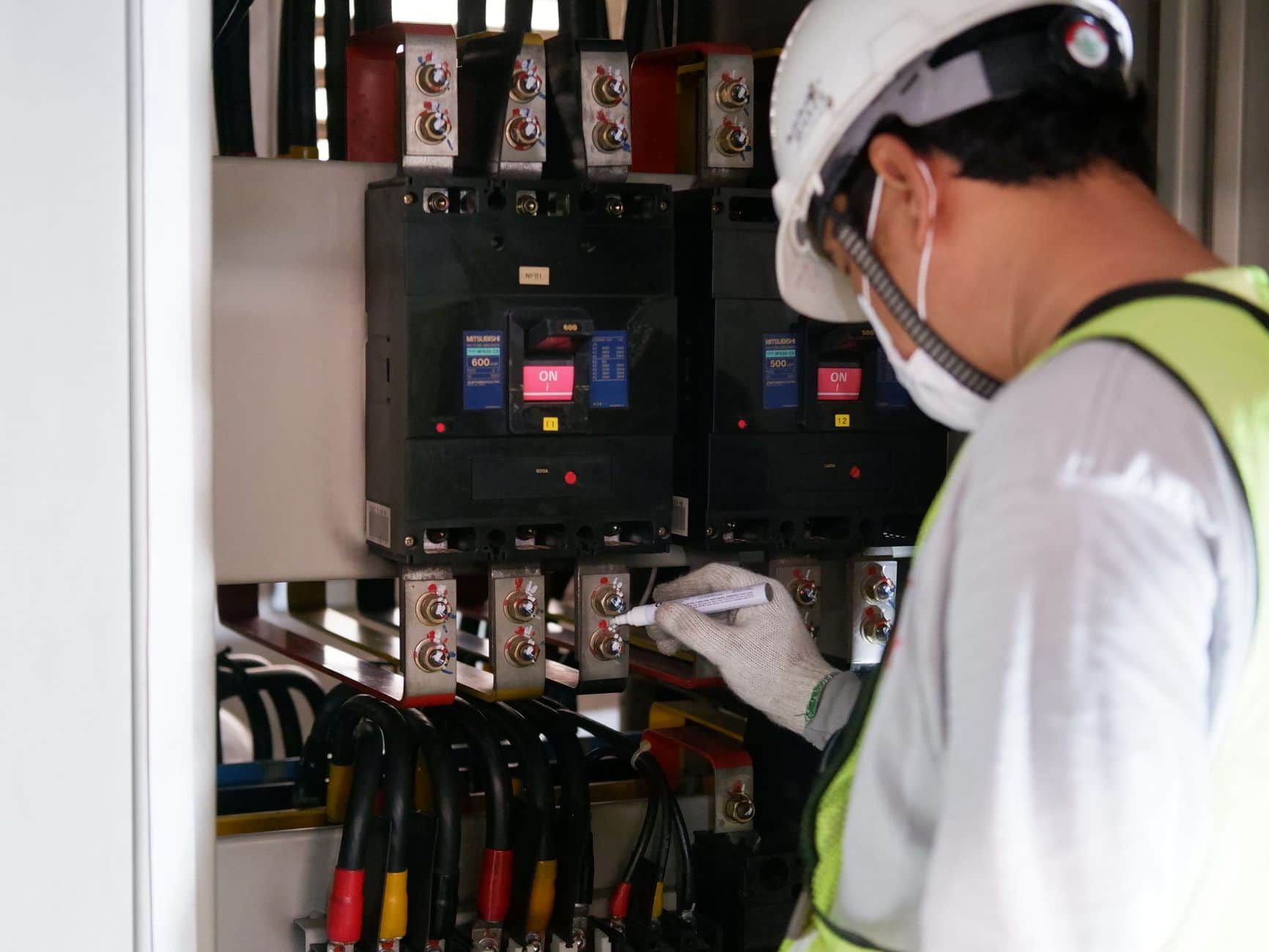
How many air conditioners can your home's panel actually handle?
It's a common pattern on Koh Samui: a villa is built with two or three AC units, and over the years the owner adds a unit in the home office, one in a guest room, maybe a ducted system for the living area. Each addition seems small on its own. But electrical panels and the wiring behind them were sized for a specific load, and tropical, year-round AC use pushes that load harder than almost anywhere else.
If you're planning to add another unit, or you've noticed warning signs already, it's worth understanding what's actually happening inside your consumer unit before you call an electrician.
How Thai villas are typically wired
Most homes on the island fall into two categories:
- Older builds (pre-2015 or so): often a single-phase supply with a modest main breaker (30–63A), and circuits added informally as rooms were renovated or extended.
- Newer villas: more likely to have three-phase supply and a panel designed with AC load in mind from day one, with each outdoor unit on its own dedicated breaker.
The problem isn't age by itself — it's whether the original design anticipated how many units would eventually run. A panel built for two split units rarely has headroom for five, even if each new unit is individually wired correctly.
Signs your panel is already maxed out
A few patterns point to a panel under strain:
- The main breaker trips when two or more AC units start compressors around the same time (not just one unit on startup — that's usually a capacitor issue, not a panel issue).
- Lights dim briefly across the house when an outdoor unit kicks in.
- The consumer unit or wall around it feels warm, or you notice a faint burning smell near the panel.
- An electrician previously told you the panel was “close to its limit” and nothing was changed since.
Any of these is worth taking seriously. A tripping breaker isn't just inconvenient — sustained overload heats wiring and connections, and in a humid coastal environment that accelerates corrosion at terminals, which raises resistance and heat further.
What happens when you add “just one more” AC
Each split system draws a real running current plus a much higher momentary surge when the compressor starts — often 2–3 times the running amperage for a second or two. One extra unit might not trip anything by itself. But if its startup surge now overlaps with an existing unit's surge, or pushes total simultaneous load past the main breaker's rating, the panel will trip at the worst possible moment — usually during the hottest part of the day, or during a power cut when everything restarts at once.
This is also why villas that add a unit “informally” (reusing an old circuit, skipping a dedicated breaker) see nuisance trips years later that have nothing to do with the AC unit itself.
Breaker sizing and dedicated circuits
As a baseline for planning, not a substitute for a proper electrician's calculation:
- Each outdoor unit should ideally have its own breaker sized to the manufacturer's recommended rating, not a shared circuit with another appliance.
- Cable gauge matters as much as the breaker rating — undersized wire on a long run (common when an outdoor unit sits far from the panel) can overheat even if the breaker itself is correctly rated.
- The main breaker and incoming supply need enough headroom for the sum of all units' running current plus a margin for simultaneous startup — not just the average load.
If you're planning a new unit, this is the point to confirm with an electrician before the AC technician even shows up to install it.
Working with what you have
If a full panel upgrade isn't in the budget right now, a few things reduce strain without rewiring the house:
- Staggered timers so multiple units don't start their compressors within the same few seconds, especially after a power cut.
- Inverter units for any new installation — they ramp compressor speed gradually instead of a hard on/off surge, which is noticeably easier on an older panel than non-inverter units.
- Turning off unused units at the breaker, not just the remote, if a guest room or office sits empty for weeks — this also helps isolate which circuit is actually causing a trip.
When to call an electrician vs a technician
An AC technician can diagnose and fix the unit itself — a weak capacitor, a dirty coil making the compressor work harder than it should, a refrigerant issue causing longer run times. But panel capacity, wiring gauge, and breaker sizing are an electrician's job, not an AC technician's. If you're not sure which problem you have, a straightforward way to start is a home visit: a technician can quickly tell you if the unit itself is healthy, and will flag it honestly if the issue looks electrical rather than mechanical.
If you want a unit checked, or you're planning an addition and want to know what the existing system can safely support, book a technician for a visit — same-day appointments are usually available, and a first assessment visit starts from 500฿. Payment is cash, Thai QR/PromptPay, or crypto.