
Dry Mode vs Cool Mode: The Right AC Setting for Koh Samui Humidity
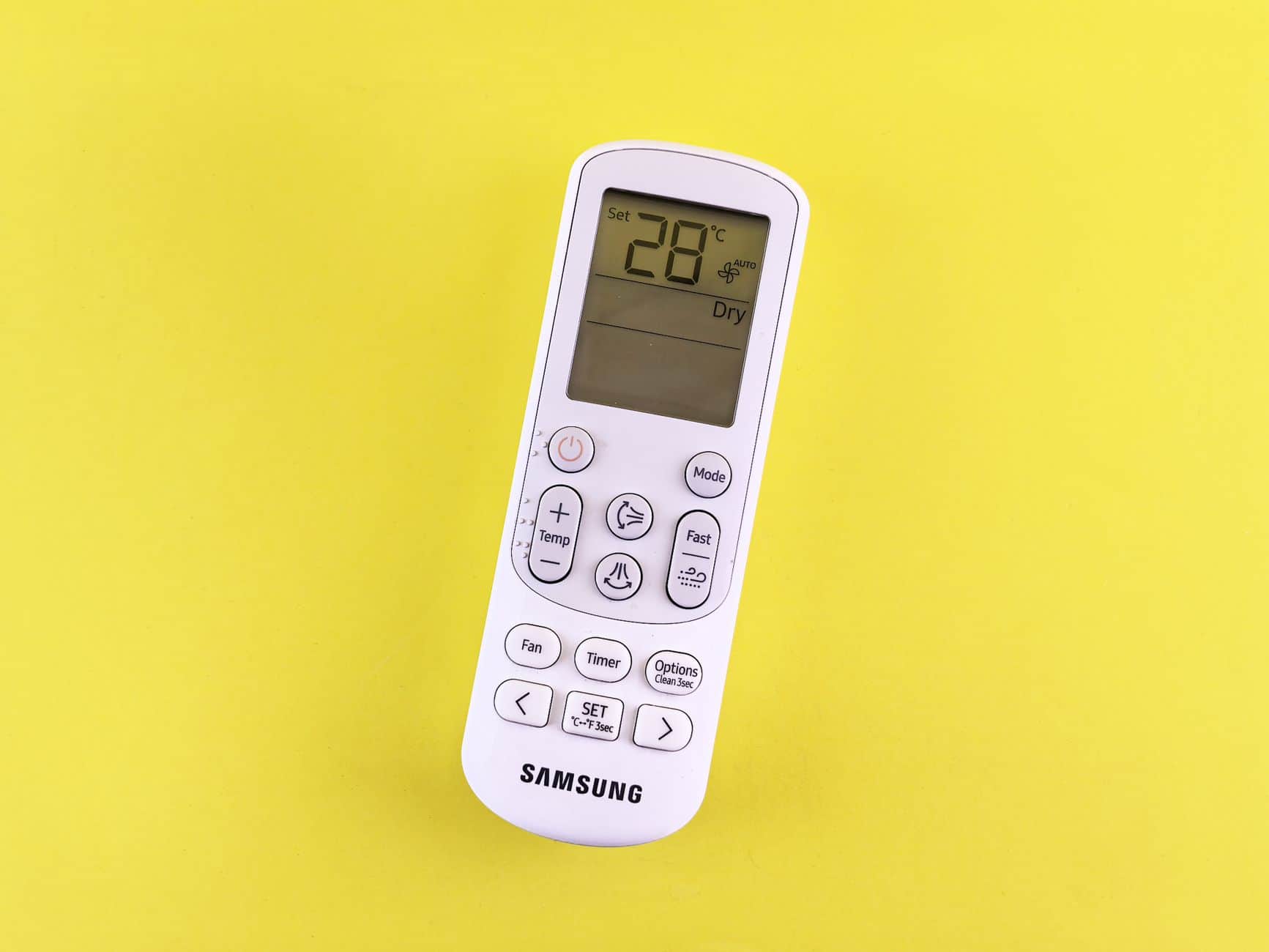
Almost every remote in Koh Samui has a row of small icons: snowflake, water drop, fan, sun. Most people leave the dial on the snowflake (Cool) all year and never touch the others. But on a humid, overcast day the water drop icon — Dry mode — often does a better job, using less electricity in the process. Knowing when to switch between dry mode and cool mode is one of the simplest ways to get a more comfortable room without calling a technician.
What Cool Mode Actually Does
Cool mode runs the compressor at whatever speed is needed to hit your target temperature, then cycles on and off (or slows down, on an inverter unit) once that temperature is reached. It prioritizes temperature over humidity. On a hot, dry-ish afternoon this is exactly what you want — fast cooling, steady thermostat control.
The catch: in Samui's rainy season, outdoor humidity can sit above 85%. A unit chasing a temperature target doesn't necessarily run long enough, or steadily enough, to pull much moisture out of the air. You end up with a room that reads 24°C on the display but still feels damp and clammy.
What Dry Mode Actually Does
Dry mode (sometimes labeled dehumidify) runs the compressor at a low, steady speed with the fan slowed right down. The goal isn't to hit a specific temperature — it's to keep pulling air across the cold evaporator coil so moisture keeps condensing out and draining away. Rooms cool slightly as a side effect, but the main job is wringing water out of the air.
Because the compressor runs gently rather than in hard bursts, dry mode typically uses noticeably less power than cool mode for the same amount of comfort gained — a genuine plus during long rainy-season stretches when the AC runs most of the day.
When Dry Mode Wins in Koh Samui
- Overcast, muggy days where the room feels sticky even though it isn't especially hot
- Rainy season months, particularly October to December
- Bedrooms at night, when a small temperature drop is fine but a musty, damp feel isn't
- Rooms that smell faintly of mildew — lower humidity slows mold growth on walls, curtains, and inside the unit itself
- Closed-up villas and condos left empty for a few days, run before guests arrive
When Cool Mode Wins
- Genuinely hot afternoons where the priority is dropping the temperature quickly
- Rooms full of people, cooking heat, or direct sun through glass
- Any time the space feels hot rather than damp — dry mode won't cool a genuinely hot room fast enough
Common Mistakes We See in Samui Homes
A few habits make either mode less effective:
- Fan speed left on high in dry mode. Some remotes let you override the fan speed even in dry mode. A fast fan blows air past the coil too quickly for moisture to condense out — leave the fan on auto or low.
- Blocked or dirty filters. A clogged filter restricts airflow in either mode and forces the compressor to work harder for a worse result. Rinse washable filters every couple of weeks in the wet season.
- Doors and windows left open. Both modes are fighting outside air; dry mode especially loses effectiveness fast if humid air keeps replacing what it just dehumidified.
- Setting a very low temperature in Cool mode expecting it to dehumidify faster. It doesn't — it just makes the room cold and clammy at the same time.
A Simple Rule of Thumb
If the room feels sticky more than it feels hot, switch to Dry. If it feels genuinely hot, use Cool. Many households simply run Dry mode as the default setting from June through December and switch to Cool on the hottest days — it's a small habit that noticeably cuts both mustiness and electricity bills.
When to Call a Technician
If a unit stays damp-feeling in Dry mode, drips more than usual, or the room never quite dehumidifies no matter which mode is used, the issue is often a dirty coil, a low refrigerant charge, or a partially blocked drain rather than the wrong setting. We do same-day visits across the island and can diagnose it on site. Payment is cash, Thai QR/PromptPay, or crypto. If you'd like it checked properly, book a technician.