
Ceiling Cassette vs Wall-Mounted AC in Koh Samui: Which Fits Your Room
Ceiling Cassette vs Wall-Mounted AC in Koh Samui: Which Fits Your Room
Most homes on Samui use wall-mounted split units, but ceiling cassettes show up more and more in open-plan living rooms, restaurants, and modern villas. Both cool a tropical room fine — the real question is which shape suits your ceiling, your layout, and how much you're willing to spend on installation and upkeep.
Wall-Mounted Split Units
This is the standard choice for bedrooms, offices, and most retrofits.
- Cheaper to buy and install — no ceiling work needed, just a wall bracket and a hole through to the outdoor unit
- Easy to service — the filter and coil are right there behind the front panel
- Airflow is directional (one side of the room), which is fine for smaller or rectangular rooms
- Works with any ceiling height, including low ceilings under exposed beams common in older Thai-style houses
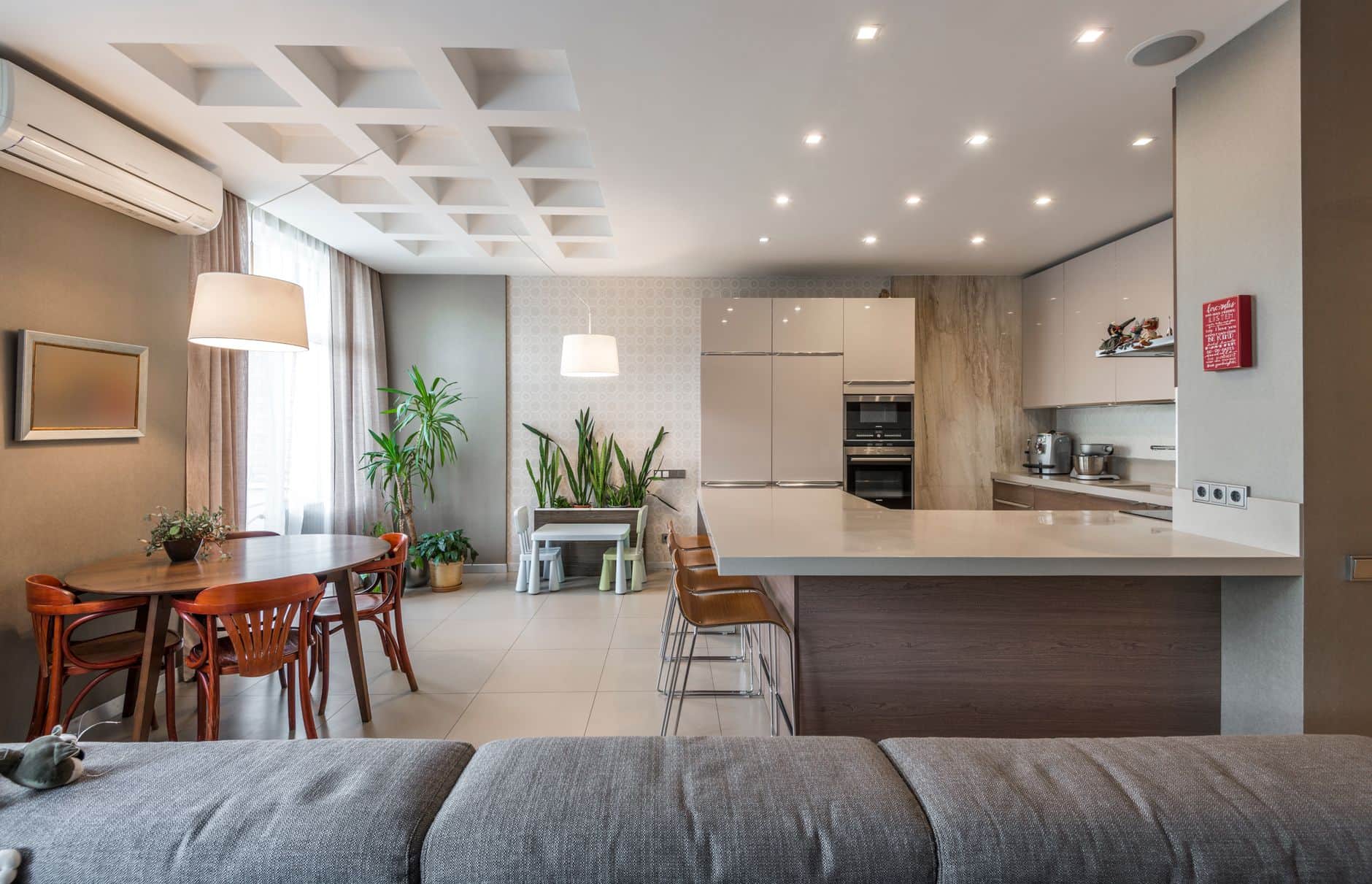
The downside is placement. In an open living-dining space, one wall unit often leaves a 'dead zone' far from the airflow path, especially with high or vaulted ceilings that let hot air pool near the roofline.
Ceiling Cassettes
Cassettes mount flush into a suspended ceiling and blow air out in three or four directions, which is why you see them in villas with open floor plans, condos with a shared living/dining area, and shops.
- 360-degree (or 4-way) airflow reaches corners a wall unit can't
- Sits flush with the ceiling — better for a clean look with no visible indoor unit on the wall
- Needs a false/suspended ceiling of a certain depth, so it's a design decision made during a renovation or new build, not a quick add-on
- The condensate drain has to run properly inside the ceiling void — in Samui's humidity, a badly sloped drain line here causes ceiling leaks that are far more annoying to fix than a wall unit's drip tray
Installation Cost and Effort
Cassette installation runs higher than a wall unit of the same capacity, mainly because of the ceiling carpentry, ducting for the drain, and the extra labor time. If you're already renovating or building and have access above the ceiling, the cost gap narrows. Retrofitting a cassette into a finished home usually means opening up the ceiling, which most owners only do during a bigger renovation.
Rough guide for Samui: wall-mounted split installation starts from 4,500฿, cassette installation starts from 12,000฿ depending on unit size and ceiling access. Get a firm quote for your specific room — these numbers move with BTU size and how far the outdoor unit sits from the indoor one.
Maintenance Differences That Matter Here
Samui's dust, salt air, and near-constant AC use mean both types need regular chemical washes — but access differs:
- Wall units: technician removes the front cover, washes the coil and fan in place, done in under an hour
- Cassettes: technician drops the front grille panel, which usually means a short ladder and slightly more careful handling around the ceiling opening, but the coil cleaning process itself is similar
Neither type is harder to maintain long-term, but cassette drain lines deserve extra attention during rainy season since a clog is hidden above your head rather than dripping visibly off a wall unit.
Which Should You Pick
- Bedrooms, home offices, small rooms: wall-mounted split is simpler, cheaper, and cools a single-direction space efficiently
- Open-plan living/dining, condos with shared common areas, restaurants and shops: cassette gives more even coverage and a cleaner ceiling line
- Renting or on a tight budget: wall-mounted is the practical default
- Building or doing a full renovation with ceiling access already open: cassette is worth considering for larger open rooms
If you're unsure which fits your space, send us the room dimensions and ceiling height and we'll tell you honestly which type — and what size — makes sense before you commit to either one.
Need help choosing or installing? book a technician and we'll walk the space with you.