
Why Your Aircon Trips the Circuit Breaker on Koh Samui
Why Aircon Trips the Circuit Breaker on Koh Samui
If your air conditioner trips the breaker the moment it kicks on, or a few minutes into a cooling run, that's not random bad luck. Every compressor draws a short surge of current on startup, and anything that pushes that surge past what the breaker or the unit's wiring can handle will trip it. In Samui's heat, humidity, and salt air, several of these weak points show up earlier than they would in a drier, cooler climate.
This guide walks through the real causes, which ones are safe to check yourself, and which ones need a technician before you flip the breaker back on again.
Why This Happens More Often in the Tropics
AC units here run nearly year-round, often for 10+ hours a day. That means:
- Compressors accumulate far more start cycles per year than in temperate climates
- Humidity speeds up corrosion inside electrical contacts and terminal blocks
- Salt air near the coast attacks breaker panels, contactors, and copper wiring
- Constant heat stresses capacitors, one of the most common trip causes
A unit that would run fine for 8 years elsewhere can start showing electrical faults after 3-4 years on Samui if it wasn't installed or maintained with that in mind.
The Most Common Causes
A failing start or run capacitor. The capacitor gives the compressor motor the extra push it needs to start. When it weakens, the compressor draws far more current trying to start, and the breaker trips almost instantly. This is one of the most frequent causes we see on service calls, especially on units 3+ years old.
An undersized or aging circuit. Villas and older buildings sometimes have an AC unit added to a circuit that was never sized for the load, or wiring that has degraded over years of heat and moisture exposure. The breaker isn't faulty here — it's doing its job correctly by tripping.
Corroded contacts or a failing contactor. The contactor is the electrical switch that sends power to the compressor. Humidity and salty coastal air corrode its contacts, causing resistance, heat, and current spikes that trip the breaker.
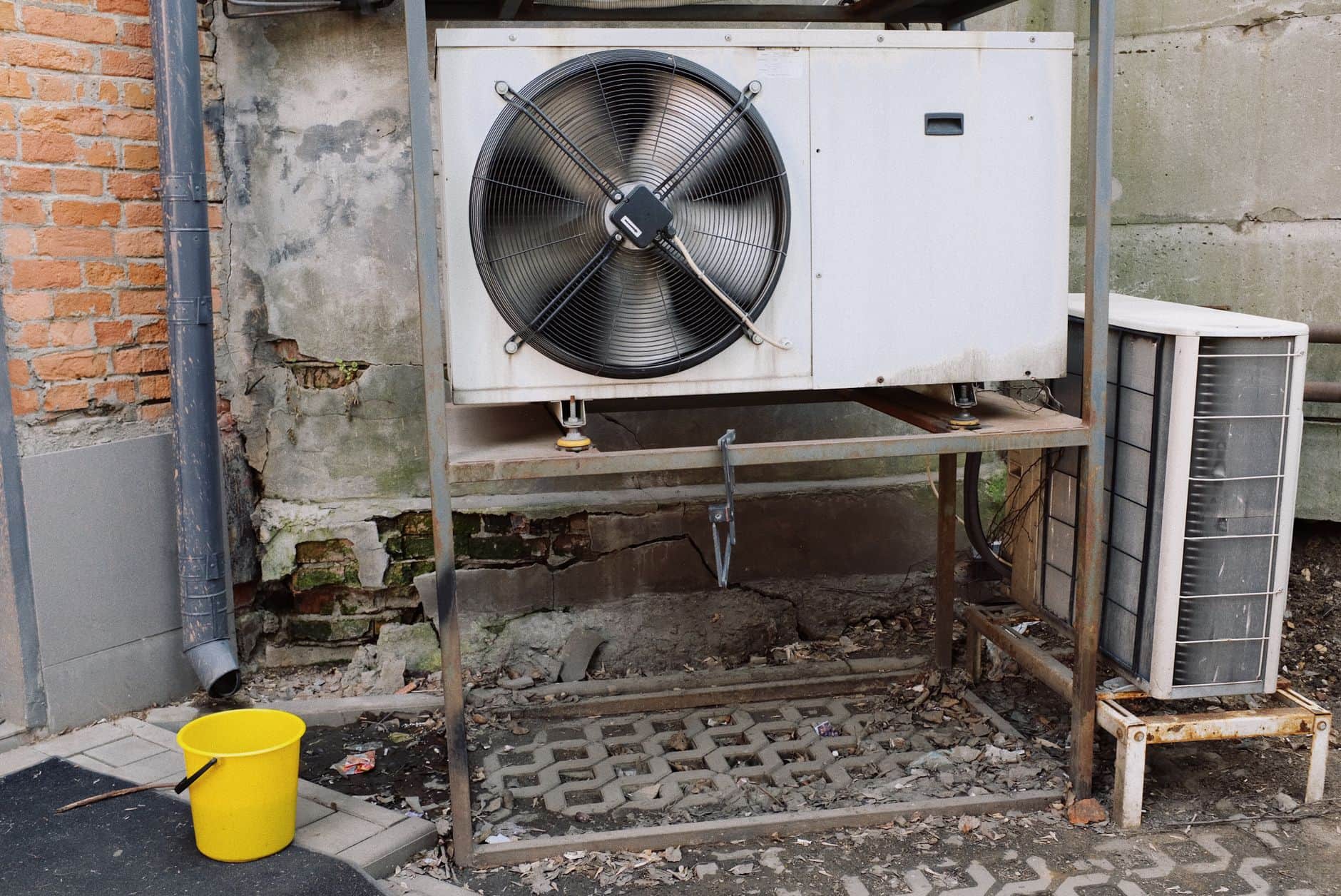
A dirty, blocked outdoor unit. When the outdoor coil is caked in dust, salt residue, or plant debris, the compressor has to work much harder to reject heat, drawing more current than normal. This is often mistaken for an electrical fault when it's really a cleaning issue. See our guide on signs your AC needs cleaning now for how to spot it.
Low or overcharged refrigerant. Both push the compressor outside its normal operating range, increasing current draw during startup.
A genuine short circuit. Damaged wiring insulation, often from rodents, moisture intrusion, or age, causes a direct short. This trips the breaker instantly and consistently, every single time.
What's Safe to Check Yourself
- Whether the outdoor unit is visibly dirty or blocked by leaves, sand, or debris
- Whether the trip happens instantly on startup or only after running a while — this timing tells a technician a lot
- Whether other appliances on the same circuit also cause tripping, which points to a circuit issue rather than the AC itself
- Whether the breaker itself feels warm or looks discolored, which can mean it needs replacing regardless of the AC
What Not to Do Yourself
Don't keep resetting the breaker and running the unit again hoping it clears on its own. Repeated trips heat up wiring and contacts each time, and a fault that starts as a minor capacitor issue can turn into burnt terminals or a damaged compressor winding if it's forced to keep trying. If a unit trips more than once, switch it off at the isolator and stop using it until it's checked.
Never open the outdoor unit's electrical compartment or the indoor unit's control board yourself. Capacitors can hold a charge even with the power off, and compressor circuits carry enough current to cause serious injury.
What a Technician Actually Checks
A proper diagnosis isn't guesswork. A technician will typically:
- Test the capacitor's microfarad rating against its rated value
- Check amp draw on the compressor at startup and during steady running
- Inspect the contactor and wiring terminals for corrosion, pitting, or heat damage
- Check refrigerant pressures against the system's target range
- Confirm the circuit itself is correctly rated for the unit's load
This narrows the cause quickly rather than replacing parts on guesswork, which saves money and avoids a repeat callout.
Preventing Future Trips
- Have the outdoor coil cleaned on a regular schedule, especially if the unit sits near the coast or under trees
- Ask for capacitors and contactors to be checked during routine servicing, not just when something fails
- If you're adding AC units to an older villa or condo circuit, have the wiring load checked before installation, not after
- Don't ignore a single trip as a one-off. A capacitor or contactor that's starting to fail rarely fixes itself
A tripping breaker is the electrical system telling you something specific is wrong. Catching it early, whether that's a worn capacitor or a coil that needs cleaning, is far cheaper than waiting for a compressor failure. Same-day visits are common for this kind of fault. Book a technician and we'll diagnose it properly rather than just resetting the switch.