
Lightning and Power Surges: Protecting Your AC in Koh Samui
Lightning and Power Surges: Protecting Your AC in Koh Samui
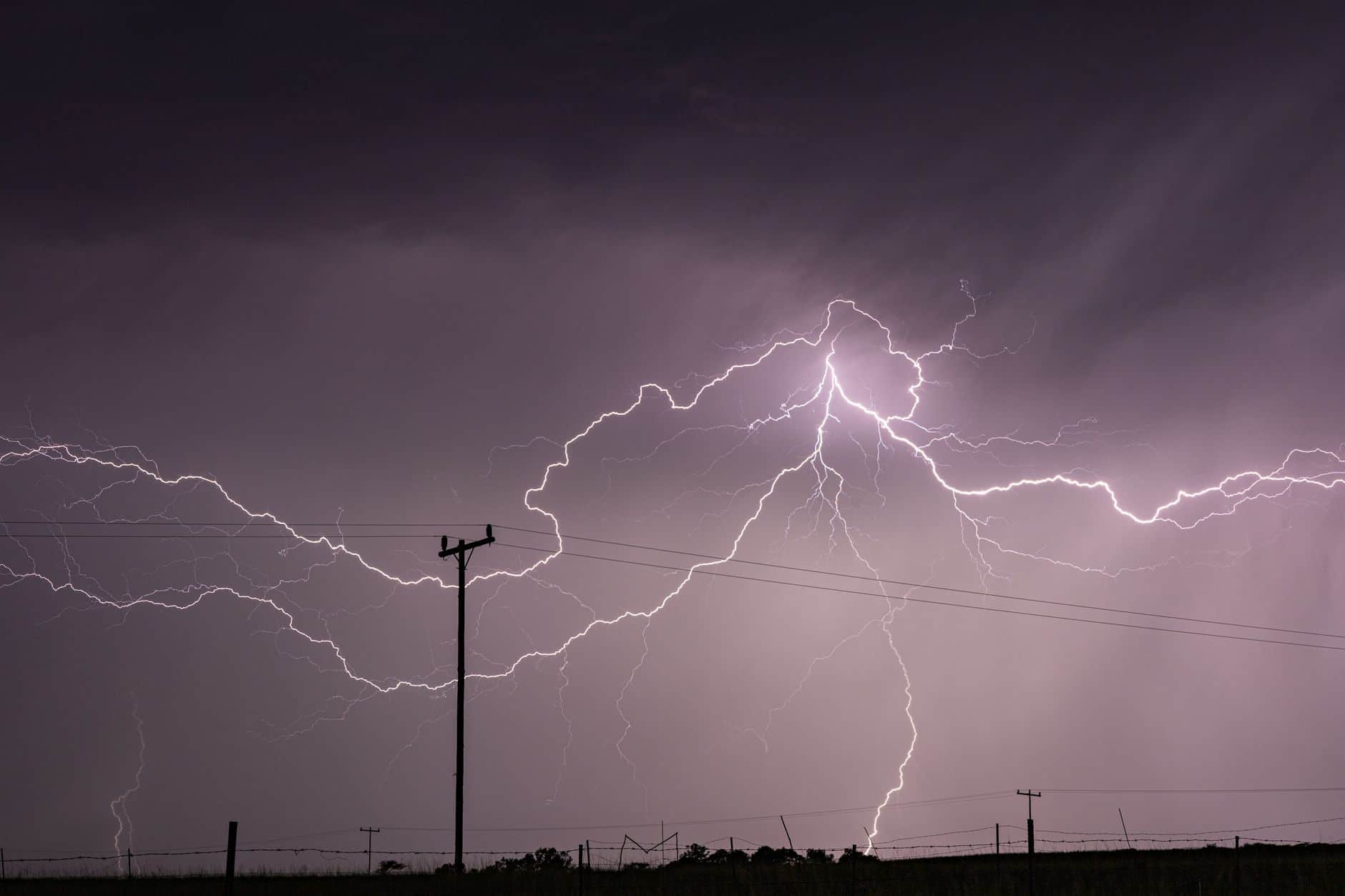
If you have lived through a rainy season here, you know the pattern: a wall of dark cloud rolls in from the sea, the sky cracks open, and somewhere on the island a transformer trips. Koh Samui's electrical grid is not as stable as it looks on a sunny day, and air conditioners are one of the first appliances to suffer when lightning strikes nearby or the power blinks on and off.
This is not a theoretical risk. Every rainy season we get calls from villas and condos where the AC simply stopped responding after a storm, and in a fair number of cases the damage traces back to a surge rather than normal wear.
Why AC units are especially vulnerable
An air conditioner combines two things that surges love to destroy: a sensitive circuit board and a hard-working compressor motor.
- The outdoor unit sits exposed. It is usually the highest metal object near the house wall, wired directly into the main circuit, and directly in the path of induced voltage from a nearby lightning strike, even a strike that never touches the building.
- Inverter units are more sensitive, not less. Modern inverter AC systems rely on electronic boards to control compressor speed. A surge that an old-style unit might shrug off can fry an inverter board outright.
- Brownouts are just as damaging as spikes. A voltage sag followed by a hard reconnection stresses the compressor windings almost the same way a surge does, and this happens on Samui often when the grid recovers after an outage.
Signs your AC has already taken a hit
After any storm with visible lightning or a power cut, watch for:
- The unit not turning on at all, or the remote showing no response
- A blinking status light or an error code on the indoor unit display
- A faint burning smell near the outdoor unit
- The AC running but the compressor never kicking in, so it blows only fan-temperature air
- Breakers that trip repeatedly when you try to restart the unit
If you see any of these, switch the unit off at the breaker rather than repeatedly trying the remote. Sending power to a damaged board again can turn a repairable fault into a full board replacement.
What actually protects an AC unit
A few measures make a real difference, and they are worth doing before the next storm rather than after:
- A dedicated surge protector on the AC circuit. Whole-unit surge protection devices, wired in at the breaker or just before the outdoor unit, absorb voltage spikes before they reach the compressor or board. This is the single most effective upgrade for a villa that loses power often.
- Proper earthing. A lot of surge damage on the island traces back to grounding that was never done correctly at installation. A technician can test earth resistance in a few minutes.
- A stabilizer for older or budget units, especially non-inverter systems in areas with known voltage fluctuation.
- Unplugging or switching off at the breaker during severe storms. If you are home and a storm is directly overhead with frequent lightning, cutting power to the outdoor unit for the duration is the cheapest protection there is.
What does not help
A few common habits give a false sense of security:
- Turning the AC off with the remote only. The unit is still connected to line power and still exposed.
- Assuming a new unit is automatically protected. Surge protection is a separate component, not a standard feature on most residential systems sold here.
- Waiting for a problem before installing protection. Board damage from a surge is rarely a simple fix; it usually means ordering a replacement part.
After a storm: a quick self-check
Before calling anyone, it is worth a 2-minute look:
- Check whether other appliances in the same room also lost power. If the whole circuit is dead, it may just be a tripped breaker, not AC damage.
- Reset the breaker once. If it trips again immediately, stop. That is a sign of a real fault, not a simple nuisance trip.
- Listen for the outdoor unit fan starting even if cooling does not follow. A fan that runs with no compressor sound usually points to a board or capacitor issue rather than total failure.
- Note any error code shown on the indoor display. It saves diagnostic time for whoever comes to look at it.
Getting it checked
Surge damage is not always obvious. A board can be partially damaged and keep working for weeks before failing completely, or a compressor can be weakened without an immediate symptom. If your AC behaved oddly right after a storm even once, it is worth a proper check rather than waiting to see if it happens again.
We do same-day visits across the island in most cases, and we can test earthing, install surge protection ahead of the next storm, or diagnose a unit that already took a hit. Payment is by cash, Thai QR (PromptPay), or crypto, whichever is easiest for you. If you want it looked at, book a technician.