
Protecting Your Aircon Outdoor Unit From Monsoon Flooding in Koh Samui
From October to December, Koh Samui gets short, violent downpours that can dump more rain in an hour than some places see in a month. Storm drains overflow, gardens turn into shallow ponds, and any outdoor condensing unit sitting low on a concrete pad can end up standing in water. An outdoor unit is designed to shed rain falling on it, not to survive water rising up into its base — and that difference is behind a good share of the compressor failures we get called out for between October and January.
Where flooding actually happens
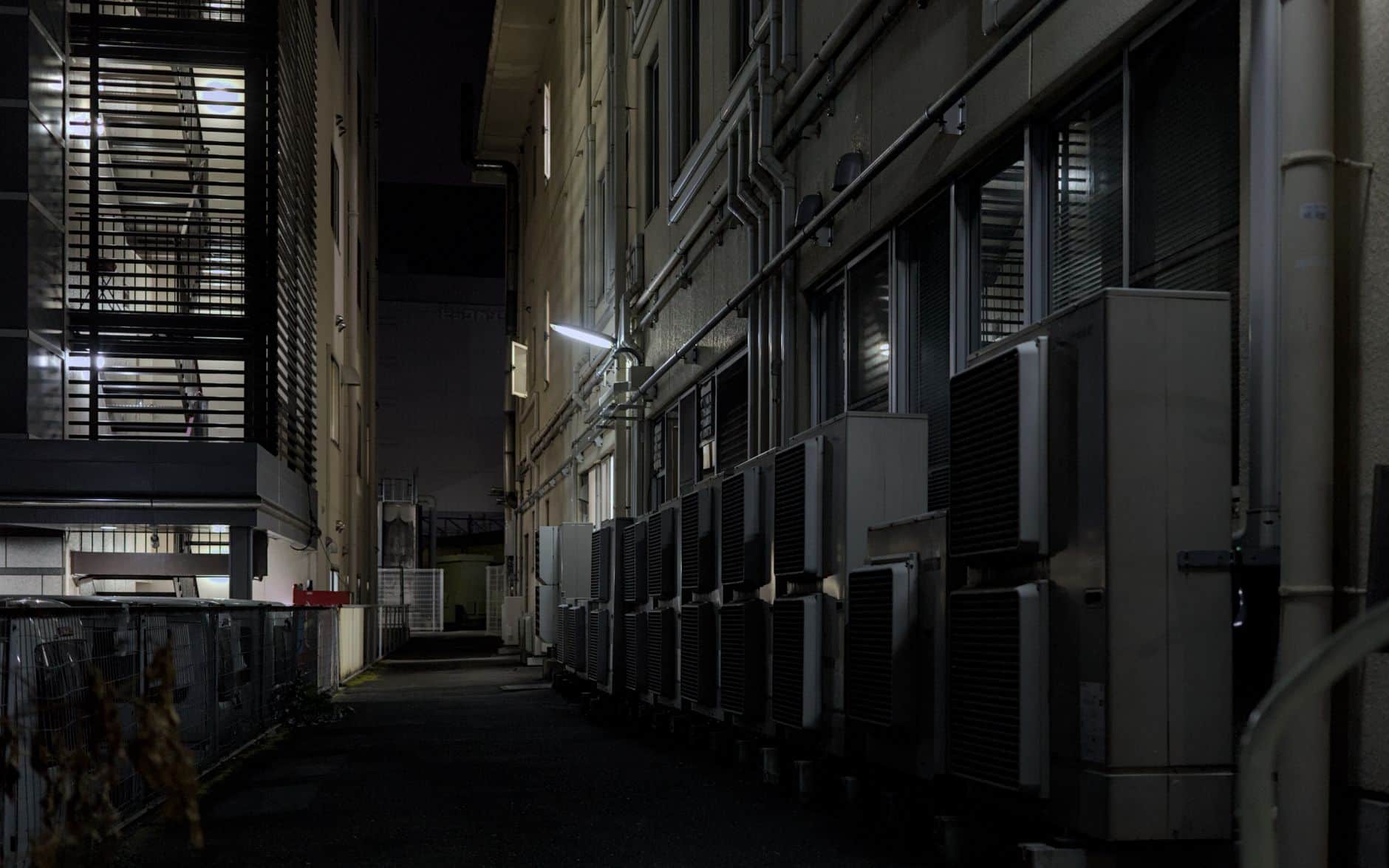
Most villas and condos on Samui mount the outdoor unit at ground level, often in a side gap between buildings or against a slope. Both spots are flood traps:
- Side gaps between buildings channel runoff from two roofs into one narrow strip of ground
- Units near a slope or retaining wall collect water draining downhill
- Units set directly on soil or gravel sink slightly over time, lowering the base closer to ground level
- Blocked garden drains or a clogged soi ditch outside the property back water up fast during a heavy squall
If your unit sits in one of these spots, it is a flood candidate even if it has never actually flooded yet.
Signs a unit already took in water
- Breaker trips the moment the unit tries to start, especially right after rain
- Unit hums but the fan does not spin, or spins then stops
- Visible water line or mud residue on the lower cabinet panel
- Rust starting at the base of the unit, on mounting bolts, or on the electrical box
- Burning or musty smell when the unit is switched on after a storm
Any of these after heavy rain is a reason to cut power at the breaker and call a technician rather than repeatedly resetting it — restarting a unit with wet electronics is how a fixable problem becomes an expensive one.
Raising the unit before the rains come
The single most effective fix is height, and it is cheap compared to a replacement compressor:
- A concrete plinth or paving-block base raised 15–20 cm above the surrounding ground clears most flash floods
- Anti-vibration rubber feet on top of the plinth also reduce noise transfer into the building
- On sloped ground, the unit should sit on the uphill or level side, never in the natural low point
- Wall-mounted brackets are an option in tight side gaps, keeping the unit off the ground entirely
Drainage around the unit matters as much as height
A raised unit still floods if water has nowhere to go:
- Clear leaves and silt out of the drain channel next to the pad before the rainy season starts, not after the first flood
- Make sure the unit's own condensate drain line is not the only path for water to exit the area — it is not designed to carry storm runoff
- A simple gravel soakaway or a short redirect pipe around the base can move surface water away from the unit rather than pooling under it
If a unit already sat in floodwater
- Do not switch it back on. Water in the electrical box or compressor terminal can cause a short or, in worse cases, damage the compressor windings permanently
- Have a technician open the unit, dry out the electrical compartment, check insulation resistance on the compressor, and clean out silt from the base pan and coil
- Units that flooded briefly and were powered down quickly usually recover fully; units left running while wet are the ones that end up needing a compressor replacement
Same-day visits are common on the island during storm season, so it is worth calling as soon as you notice standing water rather than waiting for the unit to fail outright.
A short pre-monsoon checklist
- Walk around the property and identify every outdoor unit sitting below garden or path level
- Raise or relocate any unit in a known flood path before October
- Clear drain channels and gutters feeding toward the unit
- Keep the breaker for outdoor units easy to reach so you can cut power quickly if water rises during a storm
If you are not sure whether your setup is at risk, it is worth having someone check it before the rains rather than after — book a technician for a pre-monsoon inspection. Payment is by cash, Thai QR/PromptPay, or crypto, and we do not sell this as a warranty repair — it is a straightforward mechanical fix that is far cheaper done in September than in November.