
AC Installation Day on Koh Samui: What to Expect
AC Installation Day on Koh Samui: What to Expect
Booking a new air conditioner is easy. Knowing what actually happens on installation day is where most homeowners and villa managers have questions. Here is a realistic walkthrough so nothing catches you off guard, and so you know what to check before the technician packs up.
How Long Installation Actually Takes
A single split-unit installation on Koh Samui usually takes 2-4 hours, depending on:
- Distance between indoor and outdoor units
- Whether pipework has to go through a concrete wall or an easier timber/gypsum wall
- Height of the outdoor unit position (ground level vs second-floor bracket)
- Whether old wiring or an old unit needs removing first
Multi-split systems or full villa jobs with several indoor units naturally take longer, sometimes a full day. Same-day visits are common here, but for larger jobs it's worth booking a day in advance so the crew can bring the right ladder, bracket, and pipe lengths.
Before the Technician Arrives
A few minutes of prep saves time and avoids extra charges:
- Clear the wall space where the indoor unit will go, and the ground or wall space for the outdoor unit
- Move furniture, curtains, and electronics out of the drilling path
- Confirm where your consumer unit (breaker box) is, since the technician will need access
- If you're renting, let the landlord or building management know drilling is happening
What Happens During Installation
The general sequence for a standard wall-mounted split unit:
- Mounting the indoor bracket - leveled on the wall, positioned away from direct sun through windows and away from doorways where curtains or drafts interfere with the sensor
- Drilling the wall sleeve - a hole for the refrigerant pipes, drain hose, and power cable to pass through, angled slightly downward toward the outside so condensation drains out, not in
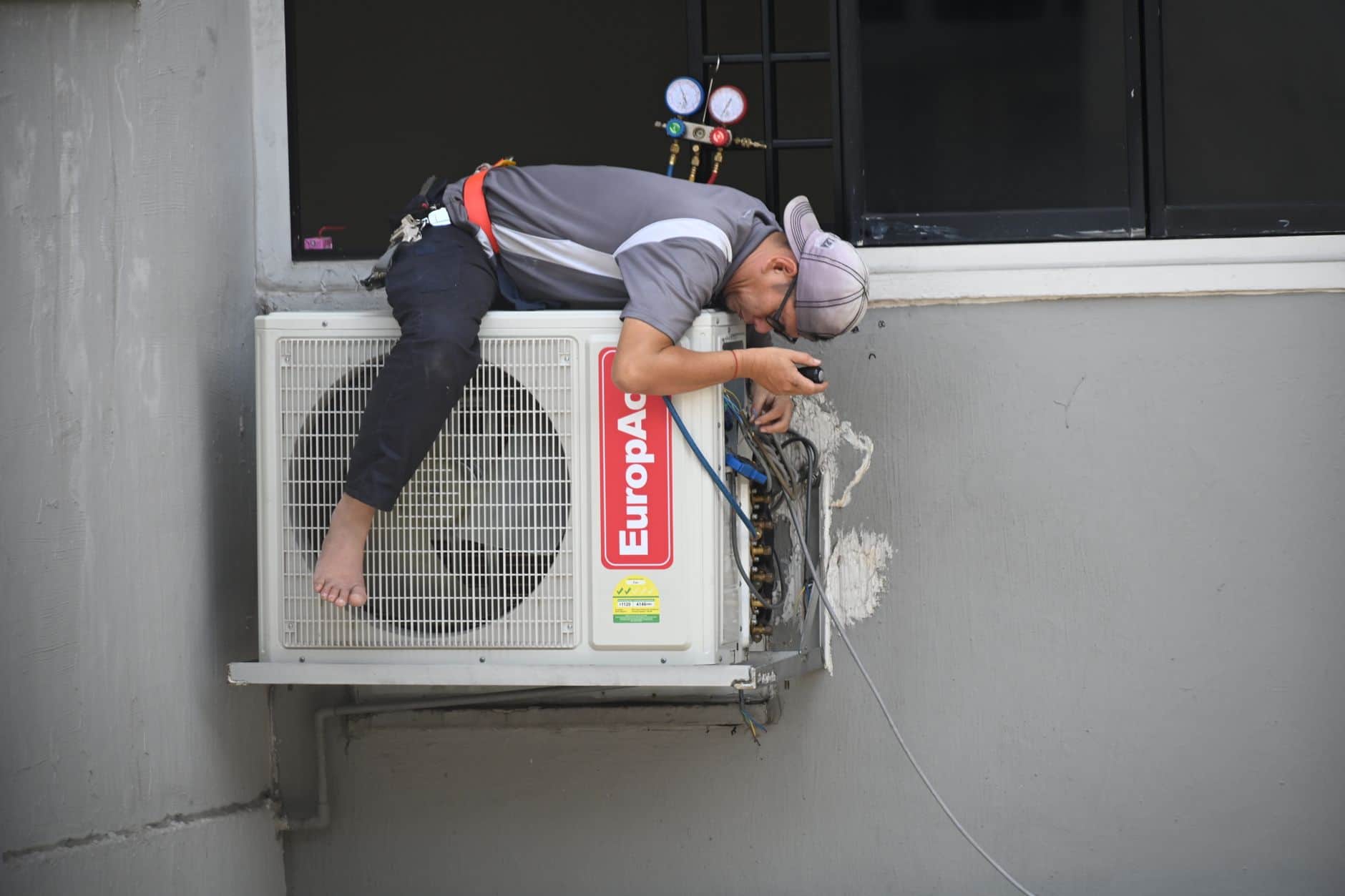
- Mounting the outdoor unit - on a wall bracket or ground pad, with rubber feet or anti-vibration pads, positioned with airflow clearance on all sides and, ideally, some shade from direct afternoon sun
- Connecting and vacuuming the line set - copper pipes are connected, then a vacuum pump pulls moisture and air out of the system before refrigerant is released. This step matters a lot in Samui's humidity - skipping it is one of the top causes of early compressor failure
- Electrical connection and testing - power is connected, the system is run in cooling mode, and temperatures, drainage, and noise are checked
What to Check Before the Technician Leaves
Don't let the visit end until you've confirmed:
- Water actually drains from the outdoor drain point when the unit runs in cool mode - pour a small cup of water into the indoor drain pan area if unsure
- No refrigerant hissing or oily residue around the flare connections
- The outdoor unit sits level and doesn't rock when pushed gently
- The wall sleeve is sealed with putty or foam, not left open (open sleeves let in rain, insects, and geckos)
- Remote control pairs and all modes (cool, dry, fan) respond
- The wiring is neat and covered, not exposed loose wire hanging near the unit
Common Installation Mistakes We Get Called to Fix
Most of our repair callouts for units under a year old trace back to installation shortcuts:
- Line set pipes bent too sharply, restricting refrigerant flow
- No vacuum step, leaving moisture in the system that later causes icing or corrosion
- Outdoor unit mounted flush against a wall with no airflow clearance, causing it to overheat and short-cycle
- Drain hose running uphill or with a low point that traps water
None of these show up on day one. They show up three to twelve months later as poor cooling, leaks, or a compressor failure - which is why it's worth choosing an installer based on process, not just the lowest quote.
Payment and Practical Notes
We accept cash, Thai QR PromptPay, or crypto on the day of installation. We don't offer a warranty on the work, so ask your installer directly what happens if something goes wrong in the following weeks - a company that stands behind its installation quality will usually offer a free follow-up visit even without a formal warranty.
If you're planning a new install or want an existing installation checked for these issues, book a technician and we'll walk you through it on site.