
Best Aircon Setup for a Home Office on Koh Samui
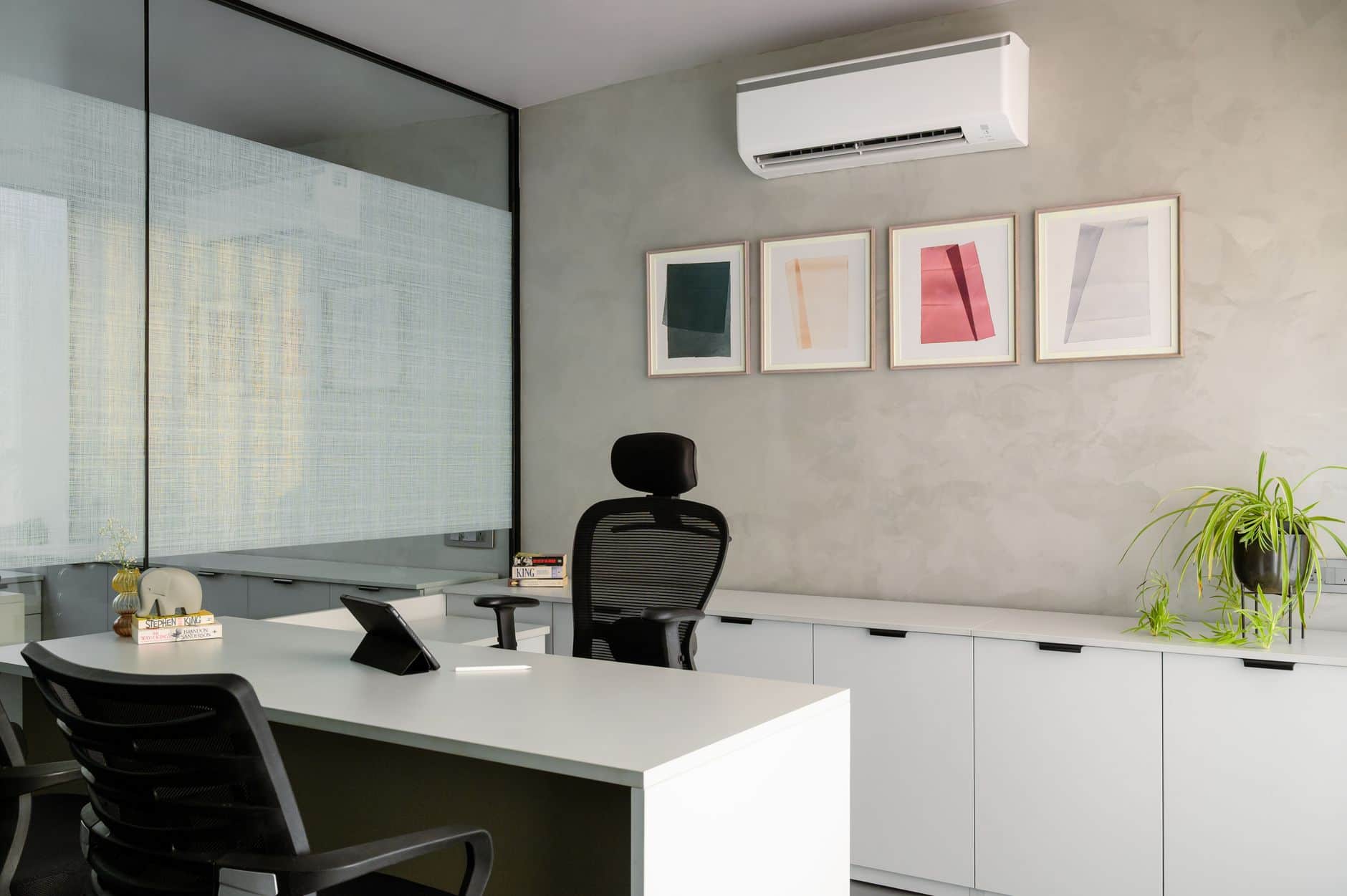
If you work from a villa or condo on Koh Samui, your home office air conditioner has a harder job than the one in your bedroom. It runs longer, sits next to hot laptops and monitors, and needs to stay quiet through video calls. Get the setup wrong and you end up with a unit that struggles, drips, or wears out early. Here's what actually matters for aircon in a home office on Koh Samui.
Electronics add real heat load
Standard BTU calculators assume a room with people and maybe a TV. A desk with two monitors, a desktop tower, a router, and charging cables adds heat that's easy to underestimate — often equal to one extra adult sitting in the room all day.
- For a small home office (around 2.5m x 3m) with a laptop and one monitor, 9,000–12,000 BTU is usually enough.
- Add a desktop PC, multiple monitors, or a printer running most of the day, and it's worth sizing up rather than matching the unit exactly to floor area.
- Don't oversize just to be safe. A unit that's too big cools the air quickly and shuts off before it removes enough moisture, leaving the room feeling clammy even when the thermostat says it's cool — a common problem in Samui's humidity.
Long daytime runs wear parts faster
A bedroom unit typically runs overnight. A home office unit often runs through the hottest hours of the day, when the outdoor unit is fighting peak heat and direct sun at the same time.
- Check the filter every two weeks during a heavy work-from-home stretch, not once a month. Dust and salt-laden coastal air clog filters faster than most people expect, and a blocked filter forces the compressor to work harder.
- Have the outdoor unit checked for shade or airflow blockage. Units baking in direct afternoon sun run less efficiently and shorten compressor life over a year of daily use.
- Inverter units handle these long, steady runs far better than non-inverter models, since they modulate output instead of cycling on and off all day.
Keeping the room quiet for calls
Nothing derails a client call like a rattling outdoor unit or a wall unit that clicks every few minutes.
- Ask for a wall-mounted split with a low decibel rating on low fan speed, and confirm the indoor unit is mounted flush and firmly bracketed — loose brackets are a common source of buzzing.
- Keep the outdoor unit's mounting pad solid and level. A unit that vibrates against a loose frame or wall bracket transmits noise straight into the room, especially in open, tiled Samui houses where sound carries.
- If the office shares a wall with the outdoor unit, ask a technician about anti-vibration pads before installation, not after the noise becomes a daily problem.
Humidity, dust, and your equipment
High humidity and salt air don't just affect the AC — they affect what's inside the room too.
- A well-sized, well-maintained AC keeping humidity around 50–60% protects laptops, external drives, and paper documents from the corrosion and mustiness that build up fast near the coast.
- Position the indoor unit so airflow doesn't blow directly onto electronics or paper — condensation on a laptop vent over months of daily use is avoidable with better placement.
- If you notice a musty smell near the desk, don't ignore it. It's usually mold building up inside the unit, and in a room you sit in for eight hours a day, that's worth fixing quickly.
Placement tips for desks and monitors
- Position your desk so the airflow crosses the room rather than blowing straight onto your neck or a monitor — direct cold air on skin for hours causes discomfort, and blowing across screens spreads dust onto them faster.
- Keep the indoor unit's intake clear of shelves, curtains, or stacked boxes — a common home-office habit that quietly starves the unit of airflow and makes it work harder than it should.
When to call a technician
If your home office AC is cycling on and off constantly, blowing warm air during the hottest part of the day, or the filter is dirty again within days of cleaning, don't wait for a full breakdown mid-workday. A same-day check can usually identify whether it's a sizing issue, a dirty coil, or a unit reaching the end of its useful life.
We offer same-day visits across Koh Samui, and payment is simple — cash, Thai QR-PromptPay, or crypto. If you want a technician to check sizing, placement, or noise before it becomes a daily distraction, book a technician.